Mathematische Studientagung 2025
"Was Hellsehen auf höherem Gebiete ist, studieren kann es jeder Mensch am Mathematisieren."
Das Thema 'Imaginieren mit den unteren, oberen und mittleren Sinnen' steht im Zentrum der Studientagung 2025. Zehn Impulsreferate jeweils mit anschliessendem Gespräch im fish-bowl werden die Tagung prägen. Vortragende sind Charles Gunn, Detlef Hardorp, Constanza Kaliks, Andreas Heertsch, Ulrich Pinkall, Salvatore Levecchia, Jutta Nöthiger und Matthias Rang.
Die Tagung richtet sich nicht nur an Mathematiker!
Seien Sie herzlich willkommen!
Programm
Anmeldung ganze Tagung
Tickets Einzelvorträge
What the Silence Asks of Us. Rethinking Our Place in a Quiet Cosmos
Annual Conference of the Section for Mathematics and Astronomy, April 30 to May 2, 2027, Goetheanum (Dornach)
The 2027 Annual Conference of the Mathematical-Astronomical Section from April 30 to May 2027 brings Rudolf Steiner’s cosmology and the work of Elisabeth Vreede into contact with the "Great Silence" of contemporary astronomy. As the age of artificial intelligence dawns, it seems to be breaking the "Great Silence" of the cosmos on earth. Artificial intelligence weighs with increasing pressure upon human consciousness and the human soul. In this way, it intensifies the question of what the Cosmic silence asks of the human being.
Dark Sky Week 2026
Contributions of the Mathematical-Astronomical Section
International Dark Sky Week (April 13-20, 2026) is a global celebration of the night. From the darkness that supports a restful night’s sleep to the wonder we experience beneath starry skies, the night plays a vital role in our wellness, the well-being of wildlife, scientific discovery, cultural heritage, and more. Yet with the rapid rise of light pollution, we risk losing the natural night we depend on. The time to act is now!
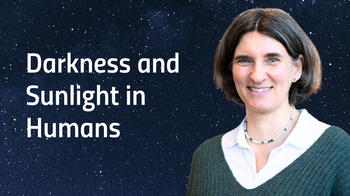
All three talks prepared by the Mathematical and Astronomical Section for Dark Sky Week, in collaboration with the speakers, can be purchased together as a video package. Oliver Conradt's introduction is freely available to everyone.


Research Result
Projective Geometry with Projective Algebra. Transition to Clifford Double Algebras and to Metric Geometries. Space and Counterspace

This article introduces projective algebra, in order to provide a complete system of axioms for projective geometry; it makes the transition from projective algebra to Clifford double algebra, in order to describe the metric Cayley-Klein geometries and it introduces the concepts of space and counterspace.
It is an outcome of the above mentioned research.
Comments are welcome. You may send them to mas@goetheanum.ch.
Read MORE
Paper on Bud Research
In the framework of the research project Rhythmical Change of Shape in Mistletoe Berries According to Moon and Zodiac Constellations by Renatus Derbidge at the Natural Science Section of the Goetheanum a first paper was published in the open access journal PLOS ONE. It presents methods and software to capture and measure the shape changes of mistletoe berries and leaf buds over time. The paper describes the software used to automatize a number of tasks including contour recognition, optimization of fitting the contour via hill-climbing, derivation of the path curves, computation of Lambda and blinding the pictures for the operator. The validity of the program is demonstrated by results from three independent measurements showing circadian rhythm in mistletoe berries. The program is available as open source and will be applied in a project to analyze the chronobiology of shape in mistletoe berries and the buds of their host trees.
Coauthors of the paper are Linus Feiten (Faculty of Engineering, Chair of Computer Architecture, University of Freiburg, Freiburg, Germany), Oliver Conradt (Section for Mathematics and Astronomy, Goetheanum, Dornach, Switzerland), Peter Heusser (Centre for Integrative Medicine, University of Witten/Herdecke, Witten, Germany) und Stephan Baumgartner (Hiscia Institute, Society for Cancer Research, Arlesheim, Switzerland).