Offer and Contact
On cloud-free nights, there is the possibility to book observation evenings with a lecture on astronomy as an introduction on enquiry at the Johannes Kepler-Observatory. Included are observations with the bare eye or through the telescope (7''-Astrophysics-Refractor).
Address
Keplerwarte am Goetheanum
Postfach
CH 4143 Dornach 1/Schweiz
Phone +41 61 706 42 20
Fax +41 61 706 42 23
mas@goetheanum.ch
All tours begin at the front desk at the Goetheanum
Offer and Contact
On cloud-free nights, there is the possibility to book observation evenings with a lecture on astronomy as an introduction on enquiry at the Johannes Kepler-Observatory. Included are observations with the bare eye or through the telescope (7''-Astrophysics-Refractor).
Address
Keplerwarte am Goetheanum
Postfach
CH 4143 Dornach 1/Schweiz
Phone +41 61 706 42 20
Fax +41 61 706 42 23
mas@goetheanum.ch
All tours begin at the front desk at the Goetheanum
Total Solar Eclipse of August 12, 2026, in Spain
by and with Wolfgang Held
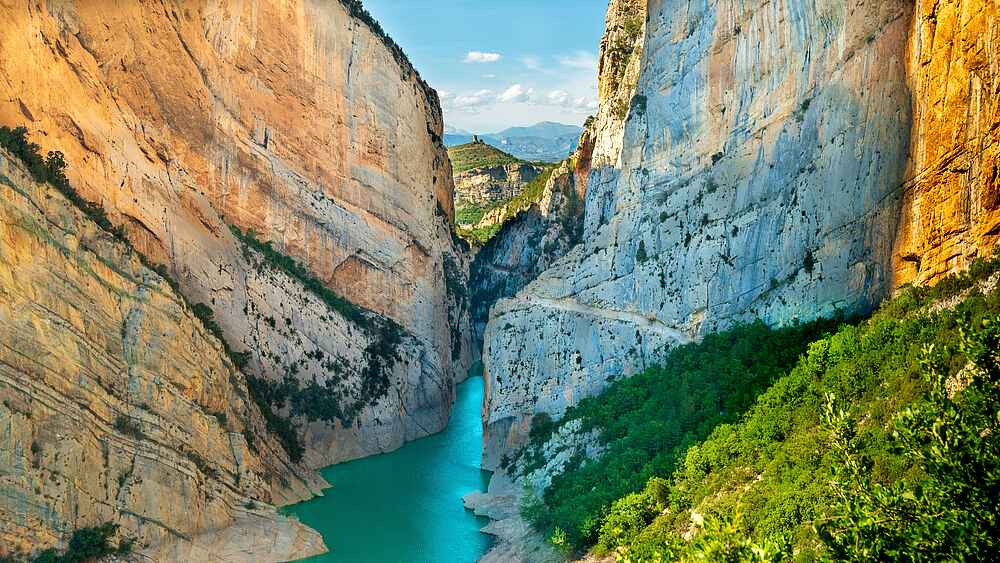
We traveled through Spain with 30 travelers to experience the solar eclipse. The drama of such a journey lies in the fact that the eclipse is the final act toward which the entire trip builds, the event for which everything is prepared.
What the solar eclipse reveals—the deeper, greater life of the Sun—was already shown to us at the beginning of the trip with the art of Barcelona: Gaudí brings stone to life, while Picasso breathes spirit into life and spiritualizes the soul. From there, we continued into the rugged landscape of Aragon, with the unique Mont-Rebei Gorge. The cave paintings of Altamira, the “school of the Ice Age,” took us back to the beginnings of the human imagination. The coming experience of the solar eclipse resonated once more, for, as a boundary experience, it too transcends our understanding.

South of Burgos, on a hilltop with an unobstructed view toward the west-northwest, we were ready on August 12 for the great spectacle. I myself have witnessed this indescribable phenomenon six times: in France in 1999, Turkey in 2006, Mongolia in 2008, China in 2009, Easter Island in 2010, and the USA in 2015. To prepare us, Michael Walter from Salzburg, with his fine Austrian timbre, read to our group Adalbert Stifter’s wonderful account of the solar eclipse of 1842 in Vienna. How strange that we ourselves, living in such a different age, should nevertheless be overcome by the same emotions as the poet 180 years ago.
Also traveling with us were the two astrophotographers Andreas and Thomas, who had already witnessed seven solar eclipses. The photographs here are also theirs. Just as 400 years ago, Tycho Brahe marveled that the moment of an eclipse could be calculated so precisely, the small dent on the sun's disk appeared through binoculars at the calculated second. A short time later, it could already be seen with the naked eye, albeit with eye protection.
Very gradually, at first slowly and then with increasing intensity, the atmosphere changed. An indescribable, pale yellowish hue settled over the landscape—or rather, it seeped into the fabric of all matter itself. We fell silent, filled with anticipation, reverence, and awe.
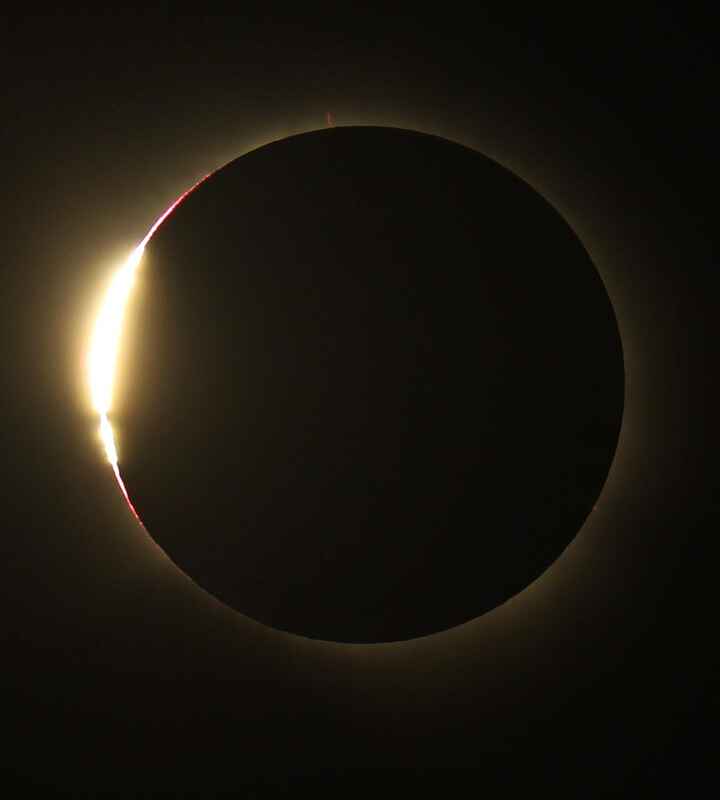
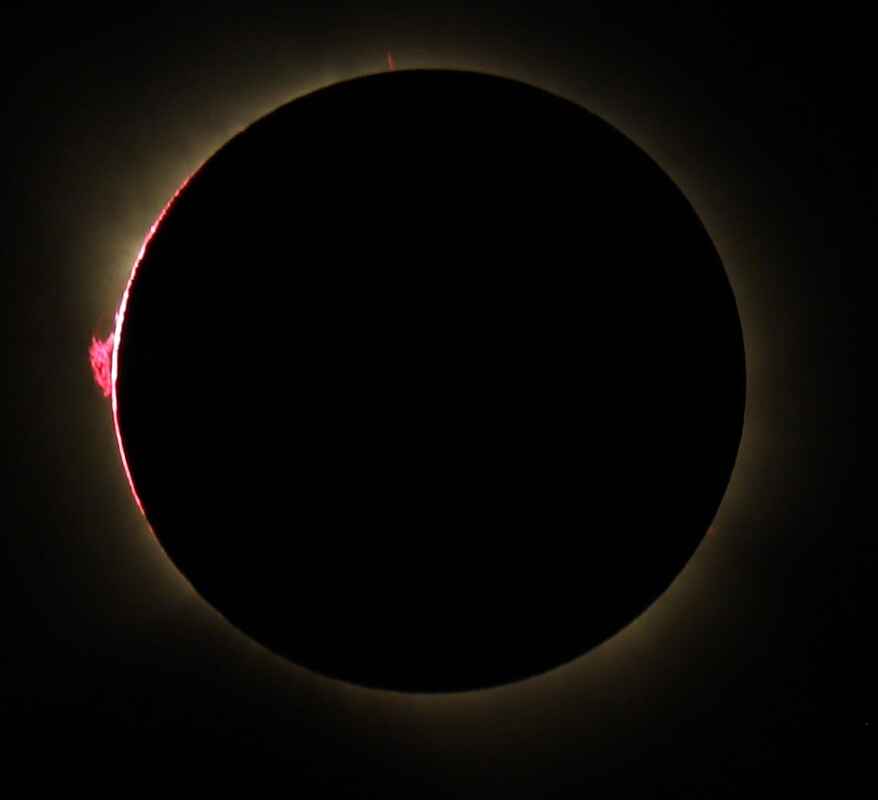
Solar Eclipse of August 12, 2026 at the Goetheanum, or Applied Astronomy
by and with Dr. Andreas Heertsch
After seeing on the website of the Mathematical-Astronomical Section (MAS) that the solar eclipse would not be taking place at the Goetheanum—at least it was not announced as an observatory event—I asked Section Leader, Oliver Conradt, whether anything at all was planned, or whether all those responsible were abroad, perhaps in order to experience the total eclipse there. As a last resort, I could offer a joint observation as an amateur astronomer.
He then introduced me by email to Bonnie Baker, his new assistant, who from that point on began supporting me most warmly. So: Where should the eclipse take place? Kepler Observatory? — Poor visibility! Goetheanum Terrace? Not much better, and besides, the Goetheanum usually closes at 9:00 p.m. Rudolf Steiner Hill: A test the day before showed it was suitable, although the Sun would set behind the crown of a tree.
It was also terribly hot at the Goetheanum. Setting up an H-alpha PST (H Alpha Personal Solar Telescope) and a 6" Newtonian was still manageable, but my 20" Maksutov-Cassegrain—my wife disparagingly calls it an “X-ray machine”—was being difficult: Since I had attached a reducer lens to reduce the 3-meter focal length, the focal length was no longer correct, and, sweating profusely, I could not get a sharp image. Annoyed, the heavy mount together with the “X-ray machine” ended up back in the car. At least the protective glasses had arrived in Weil am Rhein (Germany) the evening before. As it turned out, I could have made quite a good business with these glasses: all the opticians in Switzerland were sold out. However, my wife had reserved most of them for her school class
There was a live broadcast scheduled from the ESA (European Space Agency) in León (Spain), which was planned to be projected onto a screen in the Halde main room, where the eclipse would be the central. However, the two female scientists “chattered” continuously until shortly before eclipse totality, so I eventually switched off the loudspeaker.
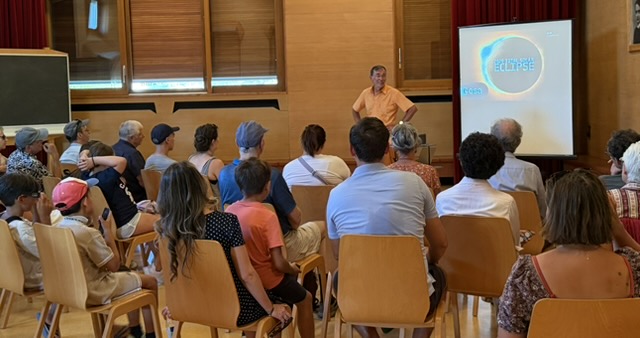
From 7:00 p.m. onward, spectators began arriving: children, parents, acquaintances, strangers—a cheerful mixture of interested people who would follow the event through binoculars, glasses, the PST, or the Newtonian telescope. At the beginning, it seemed that an introductory presentation was expected from me. So I briefly outlined the various ways of observing, and then offered an exercise for connoisseurs:
“Notice how differently you feel when, with the naked eye, you allow yourself to be affected by the quality of the light; how different the mood becomes when you look through the glasses at the dimmed Sun; how different again it is when there is a telescope between you and the eclipse; and finally, how differently you are involved when you follow the event on the screen.”
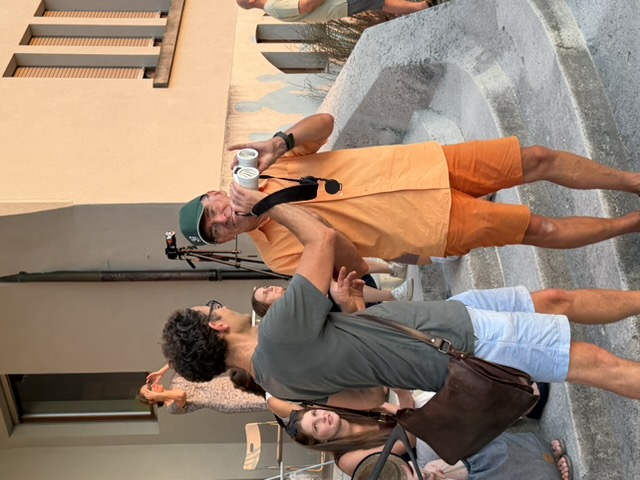
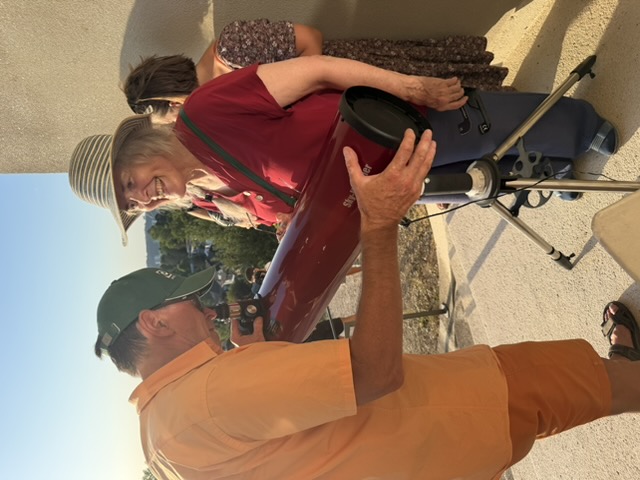
In the “real world,” at any rate, the PST and Newtonian were sensitive to their position: An inadvertent kick against the tripod or leaning on the tube was accompanied by: “You can’t see anything!” Fortunately, this could be quickly corrected in this world.
One woman brought two pieces of cardboard, one of them with a 10-cm-wide hole, and asked how she could use it to project an image of the Sun, saying that she had read about this on the MAS website. “That won’t work! The hole needs to be a pinhole.” “The article didn’t say that!”
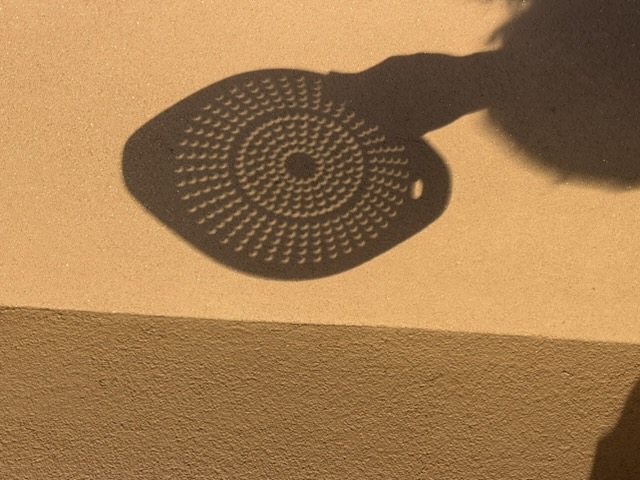
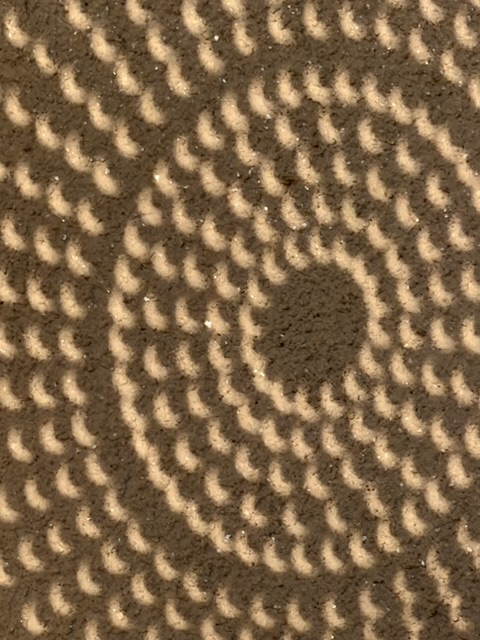
Another woman, by contrast, had read that you could do something with a salad strainer. She held it close to the wall, but did not find it very impressive. “Why don’t you move farther away from the wall…” What was impressive, however, was her surprise when, instead of the expected round patches of sunlight, she found a graceful pattern of crescents.
A teacher then remarked that she had always drawn the (half) Moon as a crescent, but now realized that, unlike the 50% solar eclipse, the boundary between light and shadow on a half Moon is not curved at all.
The coverage slowly increased and the light diminished. At the peak, more than 90%, we—without optical aids—gave our attention to the light: pale, bluish-gray. Feelings of transience and death quickly arose. A quieter, more contemplative quality also entered the conversations; even the children were no longer quite so wild.
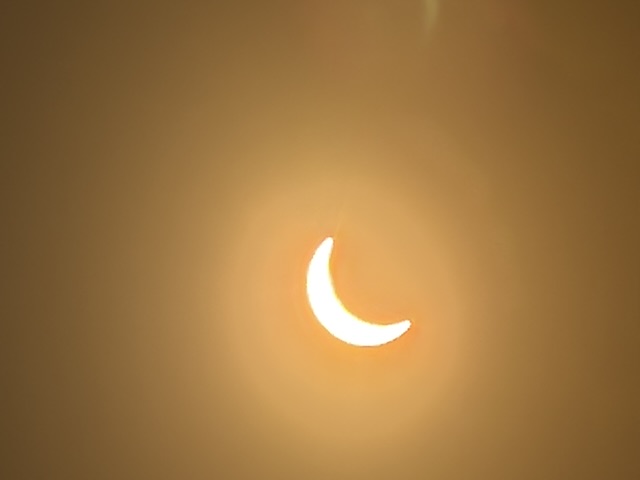
Then the light began to increase again, and the sense of unease subsided. Most people now rushed into the hall to see what was happening in León during totality. At the observatory there, the solar filter was removed at precisely the right moment, allowing us to see the corona and a prominence, which we had also observed earlier through the PST.
The evening faded into an increasingly ordinary evening sunset, and participants said their goodbyes. Through the shared experience and the willingness to come together for this event, everyone had become almost familiar with one another, grateful to have been a part of it.
This gratitude compensated me for my own attempts, all of which—the photographic sequences—failed. Particularly thanks to the cheerful Bonnie Baker, who also took care of our physical well-being, the community became almost like a family. Dear members of the MAS, you have made a good “catch” with her!
In short: The solar eclipse also took place at the Goetheanum, and it was precisely in the strange darkening of the light that it fostered a sense of community.
Stages of the Keplerwarte
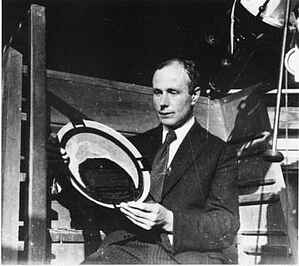
Since about 1923 the Mathematical-Astronomical Section at the Goetheanum in Dornach operates a Star-Observatory. Initially it was intended for research purposes only, but later there were observation evenings initiated for the public. The first, from Elisabeth Vreede acquired Telescope originates from the 19. Century and is displayed partially in the Johannes Kepler-Observatory as a museum piece.
Starting in 1957 east and above the Goetheanum — between the house Schuurmann and the later build Woodhouse — the building of a Sectionhouse for the Mathematical-Astronomical Section is started from Suso Vetter. On 30 March 1958, the 33rd day of the death of Rudolf Steiner, the new Sectionbuilding is festively opened through Albert Steffen. Since that day it carries the name that Albert Steffen chose: Johannes Kepler-Observatory or short Keplerobservatory. On 22 May 1958 is the newly restorated, freshly painted, blue telescope from Elisbeth Vreede in the what was then the "Tierkreishäuschen" being erected and arranged. On 7 June 1958 the first guided tour with Suso Vetter took place.
During the 80s was the existing teleskope replaced with a Celestron C-8-orange. It is a 203 mm Schmidt-Cassegrain-Mirror.
In the beginning 90s Wolfgang Held offered regularely public guided tours in the observatory, where between 20 and 100 visitors (on conventions) participated. An Astro Physics Starfire Apochromate (7,1") could be bought in 1994 because of a generous donation, that brings a great improvement to the optical quality. From 1995 until 1997 Michael Bader supported Wolfgang Held in the observatory.
Since 1999 Michael Bader offered guided tours in the observatory. With the help of the entrance fee an electric motor for the heavy 2t roof could be bought.
From February 2008 until Summer 2010 Sven Baumann offered the guided Startours in the observatory.
Since Autumn 2010 Oliver Conradt is offering the tours.